


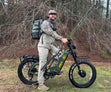

The Complete Electric Hunting Bike Guide
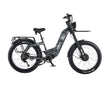
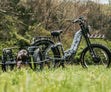
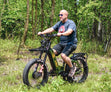
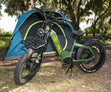
The electric hunting bike has gone from novelty to necessity in a few short years. Walk through any serious hunting camp today and you'll hear the same story: someone brought one last season, covered ground nobody else could reach, packed out their bull before the others even started hiking back, and now half the camp wants one.
The problem is that the market has exploded faster than the information about it. There are hundreds of fat tire eBikes available, dozens of brands claiming their bike is "built for hunting," and a flood of spec sheets that are more marketing than mechanics. Wattage numbers get inflated. Range claims assume ideal conditions that don't exist in the backcountry. And a bike that's fine for a casual trail ride will fail you completely when you're two miles deep at 4 AM with a full gear load and a steep ridge between you and your stand.

This guide cuts through all of it. By the time you finish reading, you'll know exactly what to look for, what questions to ask, what specs actually matter in the field, and how to match a hunting eBike to the specific way you hunt.
Why Hunters Are Making the Switch
Before getting into specs, it's worth understanding what makes a hunting eBike fundamentally different from any other form of backcountry transport — because the advantages aren't just marginal improvements. They're category changes.
Stealth That Changes the Hunt
An ATV announces your arrival from a quarter mile away. A truck engine idles loud enough to push deer off a ridge before you even park. Even walking — the quietest traditional option — produces the sound patterns that prey animals have evolved over millennia to recognize and flee: footsteps, snapping twigs, the rhythmic sound of a bipedal predator approaching.
A quality electric hunting bike produces a low, smooth motor hum that dissipates within a few dozen feet at slow speeds. In pedal-assist mode on a soft trail, it is functionally silent. Animals that would bolt at an approaching ATV or a careless footfall will hold their position as an eBike rolls past. Experienced hunters who have made the switch consistently report the same discovery: they're getting closer than they've ever gotten before, not because they're better hunters, but because their approach stopped announcing itself.
This is the core tactical advantage — and it compounds across every phase of the hunt. The ride in doesn't push game off the property. The morning approach to the stand doesn't spook deer in adjacent thickets. The pack-out doesn't scatter the herd for the next day.
Access Beyond the Trailhead
There's a reason so many trophy animals come from the deepest, most remote corners of public land: that's where hunting pressure ends. The majority of hunters stop where the road ends, or a mile down the trail, or at the edge of the ridgeline that's just a little too far to hike before shooting light. That's exactly where the uncrowded ground begins.
An electric hunting bike with a high-capacity battery covers 60 to 85 miles on a single charge under typical hunting conditions. That's not a loop around the neighborhood — that's enough range to ride miles into roadless wilderness, set up a spike camp, hunt hard for several days, and ride back out. The terrain that separates you from uncrowded ground becomes a feature, not a barrier.
Conservation of Energy — Saved for the Hunt Itself
A five-mile hike at altitude with a 40-pound pack before sunrise is exhausting. You arrive at your stand or blind already burning through your physical reserves. Shooting decisions get made on tired legs, with elevated heart rate and compromised breathing. Pack-out after a successful hunt — potentially miles with a heavy load — can turn a great day into a grueling ordeal.
The eBike changes the energy equation. You ride in, arrive calm, and hunt with a full physical reserve. When the shot happens, you don't face an impossible carry — you load the game onto a rear rack or trailer and ride out. What used to take four hours of work now takes one. That's not just more comfortable; it's more hunts per season, more locations explored, and more physical capacity for the part of hunting that actually requires it.
Access Where Motorized Vehicles Are Banned
Many of the best hunting areas on public land — national forest trailheads, wilderness area corridors, wildlife refuge boundaries — prohibit motorized vehicles while remaining open to bicycles. In most jurisdictions, a Class 1 or Class 2 eBike is legally classified as a bicycle. This means an electric hunting bike can legally access ground that's completely off-limits to ATVs, dirt bikes, and side-by-sides — expanding your huntable territory dramatically without any additional permitting.
Always verify local regulations before riding. Rules vary significantly by land management agency, state, and specific unit. On public land, Class 1 eBikes (pedal-assist only, up to 20 MPH) have the widest access; Class 2 (throttle-equipped) and Class 3 (up to 28 MPH) face more restrictions on many trails.
The 7 Specs That Actually Matter
Not all specs are equal. Here's what to scrutinize — and what the numbers actually mean in the field.
1. Motor Type and Power
The motor is the most important decision you'll make, and it comes down to one core question: mid-drive or hub-drive?
Mid-drive motors sit at the pedal crank — the center of the bike — and send power directly through the drivetrain. This means the motor works with the bike's gears, giving you dramatically better performance on steep climbs and under heavy loads. When you're grinding up a muddy hillside with a full gear load or pulling a game trailer, a mid-drive motor uses its gear advantage to deliver consistent torque without overheating or losing power. The weight distribution is also better — central placement keeps the bike balanced and easier to handle on technical terrain.
Hub-drive motors are located in the wheel hub — front, rear, or both. They're simpler, generally cheaper, and reliable for flat to moderate terrain. The limitation is that they deliver power directly to the wheel without the mechanical advantage of gearing, which means they work harder on climbs and under loads, generating more heat and consuming more battery. For hunters in flat or rolling terrain, a quality hub-drive motor is entirely adequate. For mountain hunting — steep grades, heavy loads, long climbs — mid-drive is the right answer.
Power ratings are where marketing and reality diverge most sharply. A 1000W motor doesn't necessarily outperform a 750W motor in real-world hunting conditions. What matters more than wattage is torque (measured in Newton-meters / Nm) and how that torque is delivered. Look for mid-drive motors producing 120 Nm or more for serious backcountry use. The Bafang M620 — the motor in many premium hunting eBikes — delivers up to 160 Nm, which is why it remains a benchmark in the category.
Legal note: On most US public land trails open to eBikes, the effective limit is 750W (Class 1 or 2). Many hunting eBikes ship with 1000W motors but include a programmable speed limiter for trail compliance. Know your local rules and set the bike accordingly.

2. Battery Capacity and Real-World Range
The battery is your fuel tank. Capacity is measured in watt-hours (Wh) — the product of voltage (V) and amp-hours (Ah). A 48V × 25Ah battery = 1,200 Wh. A 48V × 14Ah battery = 672 Wh. Bigger number, more range.
What manufacturers don't tell you is that range claims are made under optimal conditions — flat terrain, light rider, warm weather, low assist level. In actual hunting use, expect significant reduction from the stated range due to:
- Load weight. A 150-pound game animal in a trailer can cut range by 40–50% compared to riding unloaded. Always calculate total system weight: rider + clothing and gear + cargo + trailer and contents.
- Cold temperatures. Lithium-ion batteries lose 20–30% of effective capacity at or below freezing. This is not a marketing footnote — it's a real operational constraint. If you hunt in cold climates, battery range in October is not the same as battery range in November.
- Terrain. Steep grades, soft soil, deep grass, and mud all dramatically increase the energy required to move the bike. A 60-mile range claim on flat pavement may represent 30–35 miles on a loaded, hilly hunting route.
- Assist level. Higher assist levels consume battery faster. Riding at maximum assist all day gives you far less range than mixing modes.
Practical recommendation: For serious hunting use, target a minimum of 1,000 Wh battery capacity (48V × 20Ah or greater). If your hunting area involves significant elevation change, heavy loads, or cold weather, step up to 1,200 Wh or higher. Carry a spare battery for any trip where running out of charge mid-route would be genuinely dangerous.
Cell quality matters as much as capacity. A 1,200 Wh battery built with premium 21700 cells (the same format used in high-performance EV applications) will outperform a 1,200 Wh battery built with cheaper cells on both longevity and cold-weather performance. Ask manufacturers which cell format and brand their batteries use.
3. Payload Capacity
This spec is more important than most buyers realize, and more often misrepresented. A bike rated for "300 lbs" means the total system — rider, clothing, all gear, loaded racks, and trailer tongue weight — must stay under that figure. A 200-pound hunter in hunting clothes, carrying a loaded pack and rifle, with a rear rack loaded with gear, is already approaching or exceeding the rated limit of many budget hunting eBikes before they ever put game on the bike.
For hunting use, look for a combined rider-plus-cargo rating of 350 lbs or higher. Premium utility-class hunting eBikes are rated to 400 lbs or more. Verify that rating includes the cargo, not just the rider — some manufacturers state rider weight and cargo weight separately, which can be misleading.
Equally important is how that weight capacity is distributed. Front and rear racks with individual weight limits — commonly 50–100 lbs per rack on quality bikes — allow you to balance the load and maintain steering stability under heavy cargo.
4. Tires: Width, Tread, and Pressure Range
Fat tires aren't optional on a hunting eBike — they're the foundation of the bike's off-road capability. The question is what kind of fat tire, and how wide.
4-inch tires are the entry point for genuine off-road performance. They provide the flotation to roll over soft soil, sand, and light snow without sinking, and the contact patch for traction on muddy game trails. For most hunting applications, 4-inch tires on double-walled rims are fully adequate.
4.5–5-inch tires provide additional flotation for consistently soft or wet terrain — early-season mud, late-season snow, and wetland hunting environments where ground conditions are regularly demanding.
Tread pattern matters for the specific terrain you hunt. Aggressive lug patterns with wide spacing between knobs shed mud and provide bite on loose soil — the right choice for most backcountry hunting. Tighter tread patterns roll faster on packed surfaces but lose performance in mud and loose terrain.
Tire pressure is the most overlooked adjustment in hunting eBike setup. Running too much pressure on soft terrain reduces the contact patch and degrades traction. Dropping pressure to 6–10 PSI for soft conditions dramatically improves flotation and grip. Carry a portable pump — the ability to adjust on the trail is a genuine operational advantage.
Puncture resistance is non-negotiable for hunting use. Remote locations mean a flat tire is a serious problem, not an inconvenience. Look for tires with reinforced sidewalls and puncture-resistant belting. Many quality hunting-specific tires include both.
5. Brakes
This is a safety specification, not a performance one — and there is no acceptable compromise.
Hydraulic disc brakes are the requirement for a loaded hunting eBike. Four-piston calipers provide more stopping force than two-piston units, which matters when you're descending a steep trail with a full gear load or pulling a game trailer. The hydraulic system maintains consistent brake feel across the full shift — mechanical systems fade under thermal load from repeated braking on long descents.
Rotor size of 180mm or larger (front and rear) provides adequate thermal mass for loaded descents. Some premium hunting eBikes include 203mm rotors for even more heat dissipation.
Motor cutoff integration. Quality hunting eBikes integrate the brakes with the motor controller — squeezing either lever cuts motor power instantly. This eliminates the dangerous situation where motor assist continues to push the bike forward while you're trying to stop.
6. Frame and Suspension
Frame material for hunting eBikes is almost universally aluminum alloy — strong enough for heavy loads, light enough to keep overall bike weight manageable. Some premium builds use 6061 or 7075 aluminum for the best strength-to-weight ratio. Avoid steel frames unless weight is not a concern; they're significantly heavier for equivalent strength.
Hardtail vs. full suspension is the most consequential frame decision:
A hardtail frame has suspension only in the front fork. It's simpler, lighter, more efficient on climbs (no suspension bob wasting pedaling energy), easier to maintain, and less expensive. The limitation is reduced comfort on rough terrain, which becomes real fatigue on long rides over rocky singletrack. For most hunting applications — fire roads, game trails, moderate singletrack — a quality hardtail with a generous suspension fork travel (150–180mm) handles the terrain well.
Full suspension adds a rear shock that absorbs bumps the hardtail transmits directly to the rider and gear. The advantages are real on aggressive terrain and long rides: less fatigue, better traction on loose surfaces (the rear wheel stays in contact with the ground more consistently), and reduced vibration stress on mounted gear. The tradeoffs — weight, cost, additional maintenance points, and reduced pedaling efficiency on climbs — are also real. For hunters in true backcountry mountain terrain, covering aggressive singletrack and technical descents, full suspension earns its price. For most others, a quality hardtail is the better overall package.
Fork travel of 150–180mm is appropriate for hunting use. Less travel limits performance on rough terrain; more travel is generally found on aggressive downhill bikes where hunting-specific features are absent.
7. Drivetrain: Gears and Chain
12-speed drivetrains (Shimano Deore or equivalent) represent the current performance standard for hunting eBikes. The wide gear range provides both the low climbing gears needed for steep, loaded ascents and the higher gears for efficient flat riding. More gears means finer steps between ratios, which matters when you're managing a loaded climb and need to maintain cadence without surging power delivery.
E-specific chains (marked with an "e" designation by manufacturers like KMC and Connex) are engineered for the higher torque loads of electric assist. They're more durable under the stress of repeated motor-assisted acceleration than standard chains. On a hunting eBike ridden under load, this distinction has real longevity implications.
Clutch derailleurs (Shimano Shadow+ and equivalent) use a mechanism to maintain chain tension under impacts and rough terrain, preventing dropped chains on obstacles. For backcountry use, this is a worthwhile feature.
Essential Hunting eBike Accessories
The bike is the platform. What makes it a complete hunting tool is the accessory ecosystem built around it.
Game and Cargo Trailers
A rear hitch trailer is the single most significant capability extension for a hunting eBike. A quality two-wheeled trailer adds 200+ lbs of additional cargo capacity — enough to haul a quartered elk, a full deer, or substantial gear loads across terrain that would otherwise require multiple pack trips or ATV support.
Look for trailers with waterproof cargo boxes or heavy-duty game bags, low center of gravity for stability, and a hitch system that disengages quickly when you need to leave the trailer at camp. Trailer tires should match the fat tire format of the bike for consistent off-road performance.
Panniers and Gear Bags
Front and rear panniers purpose-built for hunting eBikes are weather-resistant, rack-mounting, and sized for the specific loads hunters carry. Camo patterns are available from most major manufacturers. Hard-sided cases offer better protection for electronics and fragile gear; soft panniers provide more flexible loading for bulky items.
Lighting Systems
Pre-dawn rides to stand locations require lighting that illuminates the trail without broadcasting your position across the landscape. Integrated headlight and taillight systems with multiple brightness modes — including low-profile red modes for minimal light signature — are worth the investment. Handlebar-mounted lights with wide beam patterns are more useful for trail navigation than narrow beam spots.
Matching the Bike to Your Hunt
The right hunting eBike isn't the same for every hunter. Here's a framework for matching the machine to your specific situation.
Flat to rolling terrain, moderate distances (under 20 miles), light loads: A 750W hub-drive fat tire eBike with a 15–20Ah battery handles this work reliably and at a lower price point. Focus budget on battery quality and brake system.
Mixed terrain, moderate to significant climbing, standard gear loads: A 750–1000W mid-drive motor with a 20–25Ah battery and hydraulic disc brakes. This is the sweet spot for most whitetail, turkey, and general backcountry hunters in the eastern and midwestern US.
Mountain hunting, steep grades, heavy loads, game hauling: 1000W mid-drive motor (Bafang M620 or equivalent), 25Ah or higher battery, four-piston hydraulic brakes, 4"+ fat tires, trailer hitch compatibility. Don't compromise here — the conditions will expose every weak point. This is the specification for western elk, mule deer, and high-alpine hunting.
Cold-climate hunting (consistent below-freezing temperatures): Prioritize battery capacity (buy more than you think you need — cold will cost you 20–30%), store and pre-warm the battery before each ride, and carry an insulated battery wrap or cover for extended rides in severe cold.
Hunters with physical limitations: Look for step-through or low-step frame designs that ease mounting and dismounting, torque sensor pedal assist (smoother and more natural than cadence sensors), and walk-assist mode for pushing the bike through sections you can't ride.
eBike vs. ATV: The Honest Comparison
| Hunting eBike | ATV / Quad | |
|---|---|---|
| Noise | Near-silent | 85–95 dB |
| Scent | Zero emissions | Exhaust and fuel scent |
| Trail access | Bike-legal trails + roads | Motorized trails only |
| Ground disturbance | Minimal | Significant rutting |
| Game disturbance | Very low | High |
| Total system weight | 80–130 lbs | 400–700 lbs |
| Operating cost | ~$0.05–0.10/charge | $5–15/day fuel + maintenance |
| Hauling capacity | Up to 400+ lbs w/ trailer | Up to 600–800+ lbs |
| Rider fatigue | Low | Very low |
| Purchase cost | $2,000–$8,000+ | $5,000–$15,000+ |
| Maintenance complexity | Low | Moderate–high |
The ATV wins on raw hauling capacity and pure mechanical simplicity for the heaviest loads. But for the full picture of backcountry hunting access — quiet approach, legal trail access, zero scent, low ground impact, and cost of ownership — the eBike is the superior tool for the majority of hunting applications.
Laws, Classifications, and Public Land Access
Understanding eBike law is not optional before you ride on public land. The classification system matters:
Class 1: Pedal-assist only (no throttle), maximum assisted speed 20 MPH. Has the widest access on public land — permitted anywhere conventional bicycles are allowed in most jurisdictions.
Class 2: Throttle-equipped, maximum speed 20 MPH. Permitted on most bike trails but restricted on some non-motorized trail systems.
Class 3: Pedal-assist only, maximum assisted speed 28 MPH. Often restricted to road and paved surfaces; limited backcountry trail access.
Key land management agency positions as of 2025: The Bureau of Land Management (BLM) and US Forest Service (USFS) have moved toward allowing Class 1 eBikes on non-motorized trails with specific designations. National Park Service rules vary by park. State wildlife management areas have their own regulations that vary significantly.
Always verify the specific rules for your specific hunting unit before every trip. eBike access on public land is an evolving regulatory area — rules that applied last season may have changed. Contact the relevant land management office directly, and carry documentation of your bike's class rating in the field.
On private land with landowner permission, these restrictions generally do not apply — one of the significant advantages of private land hunting with an eBike.
Pre-Season Checklist
Before the first hunt of the season — and before any major backcountry outing — run through this checklist:
Battery: Fully charged. Capacity tested under load conditions similar to the planned route. Spare battery charged and packed if range is tight or temperatures are cold.
Tires: Inflated to appropriate pressure for the planned terrain. Inspected for sidewall cuts, wear, or embedded debris from previous rides. Valve cores checked and tight.
Brakes: Pads checked for wear. Hydraulic fluid level confirmed. Levers tested for firm, consistent feel. Rotors inspected for warping or scoring.
Drivetrain: Chain lubricated and checked for stretch. Derailleur alignment confirmed. Shifter cables and housing checked for damage.
Lights: Charged and functional. Beam pattern aimed correctly for trail use.
Motor and display: Firmware current. Settings confirmed for the planned terrain and legal class requirements. Odometer and battery indicator functioning.
Rack and cargo systems: Bolts torqued. Pannier clips and straps in good condition. Trailer hitch functioning and safety straps intact.
Weapon mounts: Security retention checked. Release tested under simulated trail vibration.
The electric hunting bike has earned its place in the serious hunter's arsenal — not as a toy or a luxury, but as a tool that changes what's possible in the field. It extends your range beyond what your legs can carry. It approaches game country without announcing itself. It packs out what your back cannot. And it accesses ground that's been off-limits to every form of motorized transport until now.
The right bike for you is the one that matches your terrain, your hunting style, your physical needs, and your budget — not the one with the biggest marketing numbers on the spec sheet. Use this guide to ask the right questions, evaluate the honest answers, and make the choice that will serve you for seasons to come.
The backcountry is still out there. The animals that live deepest in it are still largely unhunted. You just need a better way to get there — quietly, efficiently, and fully equipped for what you find.



Leave a comment
All comments are moderated before being published.
This site is protected by hCaptcha and the hCaptcha Privacy Policy and Terms of Service apply.