



The Ultimate Guide to Electric Mountain Bikes
Before I spent serious time on an electric mountain bike, I thought I understood the appeal.
More power. Easier climbs. Longer rides.
Simple enough.
Then I actually started riding one.
What surprised me wasn't the speed. It wasn't the motor. It wasn't even the fact that I could climb hills faster.
The biggest surprise was how differently I started approaching every ride.
Places that used to feel "too far" suddenly became part of the plan.
Trails I used to skip because I didn't want to burn all my energy getting there became worth exploring.
And rides that normally ended when my legs were cooked suddenly had a second half.
That's the part most spec sheets don't tell you.
An electric mountain bike doesn't just change how you ride. It changes where you're willing to go.

The Climb Stops Being the Main Event
Every mountain biker knows the tradeoff.
You earn the descent.
That's part of the sport.
But if we're being honest, not every climb is memorable. Some are just long, repetitive slogs that separate you from the trail you actually came to ride.
The first time I took an eMTB up one of my regular routes, I kept waiting for the fatigue to show up.
It never really did.
Instead of reaching the top and looking for a place to sit down, I found myself looking for another trail.
That was the moment things clicked.
The motor wasn't replacing the experience.
It was extending it.
You still work. You still pedal. You still sweat.
You just have more left in the tank when it matters.
Mid-Drive Motors Make More Sense Once You Ride One
If you've spent any time researching electric mountain bikes, you've probably seen endless debates about mid-drive versus hub motors.

Honestly, I didn't fully understand the obsession at first.
Then I rode both.
On pavement, the difference wasn't dramatic.
On loose dirt, rocky climbs, and uneven terrain, it became obvious.
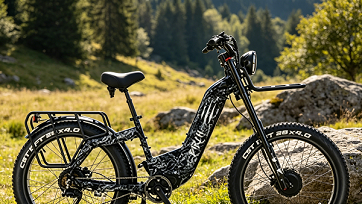
A good mid-drive system feels connected to the bike.
The power comes in naturally. The rear wheel maintains traction better. Technical climbs feel more controlled.
Instead of feeling like the bike is pushing you forward, it feels like your own legs suddenly became stronger.
That's probably the best way I can describe it.
The bike still feels like a mountain bike.
Just one that forgot how to get tired.
Nobody Warns You About the Range Problem
Most first-time buyers worry about battery range.
I did too.
I spent way too much time comparing watt-hours, calculators, and manufacturer estimates.
Then something unexpected happened.
I stopped worrying about running out of battery.
What I started worrying about was finding enough daylight.
Because once climbing becomes easier, you start riding farther.
You take the side trail.
You explore the ridge you've ignored for years.
You go check out what's around the next corner.
The irony is that the more capable your bike becomes, the more ambitious your rides become.
That's why experienced riders almost always tell new buyers the same thing:
If you're deciding between two battery sizes, buy the larger one.
The Weight Debate Is Mostly Overblown
Let's address the complaint everyone brings up.
Yes, electric mountain bikes are heavier.
You notice it when loading the bike into a truck.
You notice it when carrying it through a gate.
You definitely notice it when lifting it onto a bike rack.
But once you're moving, that extra weight becomes much less important than people think.
What matters more is how the weight is distributed.
A well-balanced bike feels planted.
A poorly balanced bike feels awkward.
After a few rides, most riders stop thinking about weight entirely and start paying attention to handling, comfort, and battery life instead.
One Thing I Didn't Expect: The Quiet
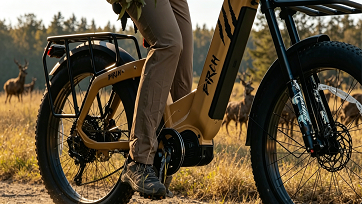
This is especially true in the hunting world.
Anyone who's spent time around public land knows what happens when an ATV comes through.
Everyone hears it.
The wildlife hears it.
The entire valley hears it.
An electric mountain bike changes that experience completely.
You hear the wind.
You hear birds.
You hear tires rolling across dirt.
You notice things.
Even riders who have no interest in hunting often mention how much more connected they feel to their surroundings.
It's difficult to appreciate until you've experienced it yourself.
The quiet becomes part of the ride.
Why Hunters Have Embraced Electric Mountain Bikes
A few years ago, electric mountain bikes weren't really part of the hunting conversation.
Today, they're everywhere.
And after spending time around hunters who use them, it's easy to understand why.
Most hunting access problems fall into an awkward middle ground.
Too far to walk comfortably.
Too close to justify an ATV.
Too rough for a standard bike.
That's exactly where an eMTB shines.
You can cover miles of forest roads before daylight.
Carry significantly more gear.
Reach locations that would normally require a long hike.
And do it all without announcing your arrival to everything within half a mile.
For many hunters, the electric mountain bike isn't replacing an ATV.
It's filling the gap between hiking and motorized access.
The Best Electric Mountain Bike Usually Isn't the Most Powerful One
This is probably the biggest lesson I've learned.
Online discussions obsess over numbers.
1000 watts.
1500 watts.
Peak power.
Top speed.
But after enough miles, those numbers matter less than people think.
The bikes riders love long-term usually have something else in common.
They're comfortable.
They're reliable.
The brakes inspire confidence.
The suspension works.
The battery lasts.
The power delivery feels predictable.
In other words, they disappear beneath you and let you focus on the ride.
That's ultimately what most riders are looking for.
Not the most powerful bike.
The bike they never have to think about.
A Few Things I'd Tell Any First-Time Buyer
If a friend asked me for advice today, I'd probably keep it simple.
Buy more battery than you think you need.
Don't underestimate the value of a good suspension system.
Choose hydraulic brakes.
If you're riding serious terrain, prioritize torque over top speed.
And most importantly, buy a bike that matches where you actually ride—not where you imagine yourself riding.
That's a mistake a lot of people make.
The best bike isn't the one with the most impressive specifications.
It's the one that gets used every weekend.
The longer I spend around electric mountain bikes, the less I think about the motor.
What sticks with me are the places I've been able to reach.
The extra trail I decided to explore.
The ridge I finally climbed.
The hunting spot that suddenly became practical.
The ride that lasted longer than expected.
That's what electric mountain bikes really change.
Not the ride itself.
The possibilities around it.



Leave a comment
All comments are moderated before being published.
This site is protected by hCaptcha and the hCaptcha Privacy Policy and Terms of Service apply.