


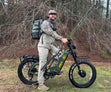


How a Rugged eBike Changes Your Mountain Trips
You remember the first time a mountain trip genuinely humbled you. Maybe it was the third mile of a steep fire road with a loaded pack, legs burning, trail still stretching upward with no end in sight. Maybe it was reaching the ridgeline viewpoint an hour past golden hour because the hike in took longer than planned. Or maybe it was standing at the trailhead map, staring at a destination marked six miles deep, calculating whether your body would actually make the round trip and accept that — not today.

The mountain doesn't care about your fitness level or your schedule. It has always set the terms.
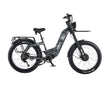
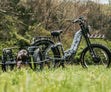
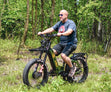
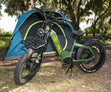
A rugged eBike changes that negotiation. Not by making the mountain easier — the mountain is exactly as steep, as rocky, as vast as it always was. But by changing what you can bring to it, how deep you can go into it, and how much energy you save for the moment you actually get there. Once you've ridden a purpose-built, fat-tired electric bike into the backcountry, a lot of what you thought you knew about mountain access stops being true.
The Climb That Used to Stop You
Let's start with the most obvious transformation: climbing.
Anyone who has ridden a conventional bike up a sustained mountain grade knows exactly what happens to their enthusiasm somewhere around the second mile of ascent. The gradient that looked manageable on the map becomes a relentless physical argument. You shift down until there are no more gears, reduce your speed to a near-walking pace, and arrive at the top emptied out — with everything still in front of you.

A rugged eBike with a high-torque mid-drive motor rewrites that experience completely. The motor doesn't replace your effort; it multiplies it. In Eco mode, it gives a gentle assist that extends your range without draining the battery. Crank it up to Trail or Boost mode on a serious grade and the hill that was previously a negotiation becomes a conversation — still physical, still requiring your input, but no longer a wall.
What this means in practice is that climbs you've avoided on conventional bikes because they were simply too hard become accessible. The ridge that required an overnight because of the approach. The summit fire road that was technically rideable but physically punishing. The back half of a loop that always seemed a little too ambitious. These become part of your regular rotation rather than aspirational dots on the map.
The mechanical key here is torque delivered through the bike's gearing system. A quality mid-drive motor produces 120 to 160 Newton-meters of torque — substantially more than your legs alone — and because it works through the drivetrain rather than directly to the wheel, you get the full mechanical advantage of each gear. Low gear plus high motor assist is an almost unstoppable combination on technical mountain terrain.
Going Deeper Than You've Ever Gone
Range is where the mountain trip transformation becomes genuinely life-changing.
The limit on how far you can go on foot or by conventional bike is set by your physical capacity for the round trip. If the destination is seven miles in and you have a hard stop at 14 miles of effort for the day — plus a return hike with tired legs — you're not reaching the destination. You're reaching whatever you can manage and turning back. For most recreational riders and hikers, the honest penetration depth into serious backcountry is a few miles. Beyond that, you're in expedition territory that requires overnight gear and multi-day commitment.
A rugged eBike with a high-capacity battery (48V / 25Ah = 1,200 Wh) opens a range of 60 to 80 miles of pedal-assisted riding under typical conditions. Even accounting for the real-world reduction from climbing, elevation, and loaded gear — call it 40 to 50 miles in mountain terrain — that's a round trip of 20 to 25 miles into roadless territory and back. In a single day. Without an overnight kit.
That's not an incremental improvement on foot travel. It's a different category of access. Destinations that required multi-day backpacking commitment become day trips. The high meadow at the end of the ridge. The alpine lake that sits behind two serious climbs. The canyon bottom that's only ever shown up on your map as somewhere you'd like to go someday. With a rugged eBike, someday becomes this Saturday.
The critical caveat: plan your range honestly. Cold temperatures reduce battery capacity by 20 to 30%. Sustained climbing on maximum assist is harder on the battery than rolling terrain. Loaded gear adds resistance. Start with a conservative estimate of your effective range in your specific conditions, keep the battery above 20% when you reach the halfway point, and carry a backup plan for the return trip on lower assist modes to conserve power.
Carrying What You Actually Need
Ask any backcountry traveler what they've left at the car because it was too heavy to carry in, and you'll hear a list of things that matter. The good camera and the long lens. The camp chair. A proper tripod. An extra layer for unpredictable weather. The coffee setup that makes a morning at elevation actually feel like a morning. All the gear that would make the experience significantly better, left behind because the carry-in imposes brutal weight discipline.
A rugged eBike ends the tyranny of pack weight. The bike carries the load; you carry yourself.
Front and rear racks on a purpose-built utility or hunting eBike support 50 to 100 pounds of cargo per rack — more than most people can carry comfortably on their back for a mile, let alone all day. Panniers, dry bags, and frame packs distribute the load across the bike's structure rather than your spine. The result is that you can bring the full camera kit, the proper camping setup, the additional safety gear, and the extra food and water that make a long day in the mountains comfortable rather than marginal.
This changes the character of the mountain trip beyond just convenience. When you're not managing physical fatigue from a heavy pack, you have more capacity for the things you actually came for — observation, photography, exploration, the unhurried attention to detail that makes a mountain day memorable. You ride in, arrive without the depleted feeling of a long carry, and spend your energy on the experience instead of the transportation.
The Terrain That Was Always Off-Limits
Not all mountain terrain is the same, and some of it has always been effectively inaccessible to anything less than a purpose-built vehicle. Soft ground near creek beds. Rocky ridgeline singletrack. Steep loose soil on approach trails. Sandy wash bottoms. Early-season mud that swallows conventional tires.
Fat tires — 4 inches wide and wider — transform the physics of these surfaces. The large contact patch distributes weight across a much wider area, dramatically reducing ground pressure. Where a conventional mountain bike tire punches into soft soil and loses momentum, a 4-inch fat tire floats across the surface, maintaining forward progress with the same effortless quality that snowshoes bring to deep powder. Drop the tire pressure to 8 to 12 PSI and the tire conforms to irregular surfaces, wrapping around rocks and roots rather than bouncing off them.
Combined with a powerful motor that maintains momentum through technical sections, the fat-tired rugged eBike handles terrain that would stop a conventional bike cold and challenge even a lightweight ATV. Rocky doubletrack, muddy game trails, creek crossings with loose cobble bottoms, steep switchback descents — the bike absorbs what the trail throws at it and keeps moving.
For mountain photography, this means you can reach viewpoints that require going off the main trail. For hunters and wildlife observers, it means approaching terrain from directions that animals don't associate with human activity. For anyone who has stared at a map feature and wondered whether it was reachable — the honest answer on a rugged eBike is usually yes.
Arriving Ready — Not Wrecked
This is perhaps the most underappreciated transformation a rugged eBike delivers, and it compounds across every aspect of the mountain trip.
When you hike or ride a conventional bike to a destination, you arrive in a state of physical depletion proportional to the effort required to get there. The farther or harder the approach, the less you have left for the destination itself. Photography suffers because your hands aren't steady and you don't have the patience to wait for the right moment. Wildlife observation suffers because you're focused on recovering rather than watching. The campsite setup that should take twenty minutes takes an hour because you're sitting down between tasks.
With a rugged eBike, the approach is the approach — not the event. You arrive with your physical reserves largely intact, ready to do what you came to do. The shooting session starts with full focus rather than residual fatigue. The exploration of a new area happens with genuine curiosity rather than the narrow pragmatism of someone who needs to turn around before they're too tired to get back.
And on the return trip, this cuts the other direction too. The ride out doesn't compound the physical cost of the day the way hiking out does. At the end of a long day in the mountains, the eBike carries you back to the trailhead at the same speed it carried you in — motor assist doing the work while you recover. What used to leave you couch-bound the following day becomes a productive tiredness that a night's sleep resolves.
What Changes on the Mountain When You Ride One
Here is what actually shifts, concretely, when a rugged eBike becomes part of how you access the mountains:
Your ambition expands. Destinations that lived on the "someday" list start showing up on the weekend calendar. The ambitious loop becomes the regular route. The remote lake becomes the place you go for a quiet morning rather than a significant expedition.
Your seasons extend. With fat tires and a capable motor, early-season mud and late-season snow that would shut down trail access for a conventional bike become manageable. You ride longer into autumn and earlier into spring.
Your gear improves. When you're no longer constrained by what you can carry on your back, you bring the equipment that actually serves the purpose of the trip. Better camera gear. More complete safety kit. The comfort items that make a full day in the mountains sustainable rather than just survivable.
Your physical experience of the mountain changes. This is more subtle and more significant than it sounds. When the transportation stops consuming most of your energy budget, the mountain stops being primarily a physical challenge to overcome and starts being primarily a place to inhabit. You notice more. You stay longer at things that interest you. You move with the landscape rather than through it.
You share it differently. Riders who would find a full day of mountain hiking prohibitive — older family members, riders returning from injury, partners who want to experience the backcountry without the fitness prerequisite — can come along. The rugged eBike is one of the most effective tools for making mountain access genuinely inclusive without compromising the depth of the experience.
What to Look for in a Mountain eBike
Not every eBike belongs on serious mountain terrain. The machines that genuinely change your mountain access share a set of characteristics:
Motor torque over raw wattage. A 750W mid-drive producing 120+ Nm of torque will outperform a 1000W hub motor on technical climbs. Ask about torque, not just wattage.
Battery capacity for your actual range. 1,000 Wh minimum for serious mountain day trips. 1,200 Wh or more if you're covering significant elevation or riding in cold conditions.
Suspension appropriate to the terrain. 150 to 180mm of front fork travel for most mountain applications. Full suspension (front and rear shock) for consistently aggressive terrain or long days on rough singletrack.
Hydraulic disc brakes with large rotors. 180mm rotors minimum, four-piston calipers preferred. Mountain descents under load require brakes that perform reliably through sustained use.
Fat tires (4"+ width) for mixed surface capability. If your mountain trips take you off maintained trails, fat tires are the enabling technology.
Frame geometry built for stability under load. Lower bottom bracket, longer wheelbase, and relaxed head tube angle all contribute to the stable, confident handling that makes technical terrain manageable rather than intimidating.
The Mountain Hasn't Changed. You Have.
The ridgeline is still the same distance. The summit still sits at the same elevation. The creek crossing is still cold in early season and slippery after rain. The mountain hasn't moved an inch.
What changes on a rugged eBike is the ratio of your capability to the mountain's demands. And when that ratio shifts — when the climb that used to stop you becomes something you manage, when the destination that required a two-day backpack becomes a day trip, when the terrain that was off-limits becomes the route you look forward to — the entire geography of what's possible in the mountains shifts with it.
That's not a small thing. For anyone who loves the mountains and has felt the frustration of the gap between where the trail goes and where their body can sustainably take them, a rugged eBike closes that gap in a way nothing else does.
The mountain is waiting. You just have a better way in.



Leave a comment
All comments are moderated before being published.
This site is protected by hCaptcha and the hCaptcha Privacy Policy and Terms of Service apply.