


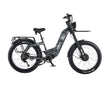


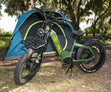
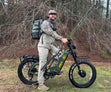


Why Utility eBikes Are Replacing ATVs on Modern Farms
There's a quiet revolution happening across farms and ranches in America — and ironically, quiet is exactly the point.
From cattle operations in Texas to orchards in California to sheep stations in Montana, a growing number of landowners are trading their gas-powered ATVs and side-by-sides for something lighter, leaner, and far more capable than most people expect: the utility electric fat tire bike. It hauls feed. It runs fence lines. It carries tools, tows trailers, and covers dozens of acres without burning a drop of fuel or spooking a single head of livestock.
If you haven't considered a ranch eBike for your operation, this is your introduction.

The Problem with "Good Enough" Transportation on the Farm
For decades, the ATV has been the workhorse of choice for small-to-mid-sized farm and ranch operations. And it's not hard to understand why — four wheels, a cargo rack, and enough power to pull a trailer made it the obvious answer. But ATVs come with trade-offs that add up fast:
Fuel costs. Gas prices fluctuate, but the appetite of a 400cc quad never does. Daily use across a working property adds up to hundreds — sometimes thousands — of dollars per year in fuel alone.
Noise. An ATV announces your arrival from a quarter mile away. For livestock management, that's a problem. Cattle, horses, and sheep react to engine noise, and a spooked herd in the wrong paddock can turn a routine check into an hour-long ordeal. During calving season, that noise stress is genuinely harmful.
Access limitations. Quads can't go everywhere. Narrow gates, soft ground near creek beds, dense brush, and steep sidehills all limit where a full-size ATV can operate safely. And in conditions where a quad can barely manage, your truck certainly can't.
Maintenance burden. Carburetors, oil changes, belts, air filters — small engine maintenance is relentless. Every hour spent wrenching is an hour not spent doing actual ranch work.
Utility eBikes solve all four of these problems without asking you to compromise on capability.

What Makes a Utility eBike Right for Farm & Ranch Work?
Not every electric bike belongs on a working property. What you need is a machine purpose-built for load-bearing, all-terrain operation — and that means several non-negotiable features.
Heavy-Duty Load Capacity
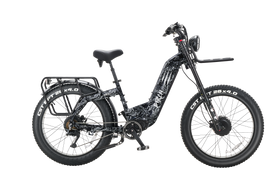
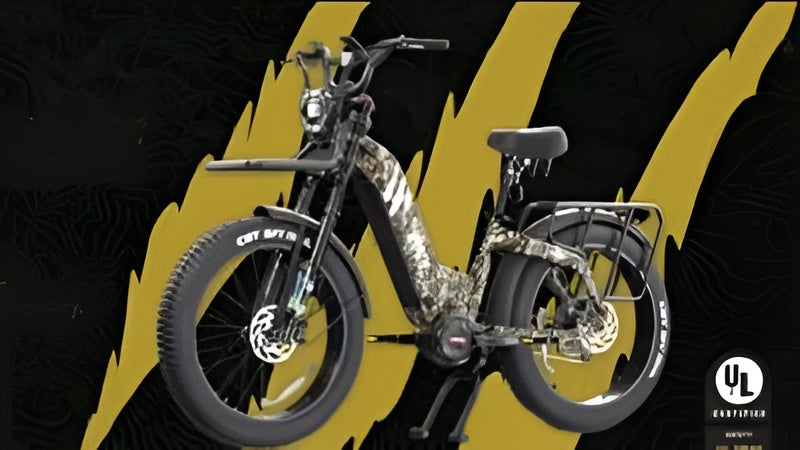
A true utility ranch eBike needs to carry serious weight. The best models in this class support 400 lbs or more of combined rider and cargo — enough to haul a load of fencing supplies, a mineral tub, feed bags, or a full set of hand tools without the bike squatting or losing stability. Front and rear racks with high individual weight ratings let you distribute loads efficiently, and a hitch-mount cargo trailer extends your hauling reach even further when you need to move materials across longer distances.
When you're covering a 500-acre property and need to deliver fence posts to a remote corner, load capacity isn't a nice-to-have — it's the whole point.
Tool Mounting and Attachment System
Here's where utility eBikes genuinely shine over ATVs: the ability to mount exactly what you need, where you need it.
Ranch-duty eBikes with well-designed rack systems support a wide range of practical attachments — saddlebag pannier systems for hand tools, shovel and post-pounder mounts, rifle and bow scabbards for predator control, camera system brackets for trail monitoring, and spray tank holders for targeted herbicide application. The front rack alone can carry a toolbox that keeps your essentials on hand: wire cutters, fence pliers, staple guns, and tape — everything you need for a fence walk without a return trip to the barn.
No more pulling up to a downed fence section only to realize you left the wire stretcher back at the shop.
Long-Range Battery for All-Day Operations
Range anxiety is real — and on a working farm, running out of power two miles from the barn isn't just inconvenient, it's a workday-ending problem.
The best utility eBikes for ranch use are equipped with high-capacity 48V batteries in the 20–25Ah range, delivering pedal-assisted range of 60 to 85 miles per charge on flat to moderate terrain. That's enough for a full day of operations on most properties — fence walks, pasture checks, water system inspections, and feed runs — without needing a midday recharge.
For truly remote operations, dual battery compatibility extends that range further still. And charging is as simple as plugging into a standard 110V outlet in the barn overnight. No fuel cans, no pump trips, no generator required.
Fat Tires for Every Surface You Actually Ride On
Working land isn't paved. A ranch eBike needs to handle wet grass, loose gravel, soft soil after rain, creek crossings, rutted two-tracks, and rocky hillsides — often in a single afternoon.
The 4-inch wide fat tires found on premium utility eBikes provide exceptional flotation on soft ground, dramatically reducing the risk of getting stuck in wet pasture where a quad would churn trenches in the turf. Low tire pressure — as little as 6–8 PSI — creates a large contact patch that distributes the bike's weight across a wider area, protecting ground cover and allowing you to ride in conditions that would stop a heavier vehicle cold.
This isn't a minor advantage. On any operation with irrigated fields, creek bottoms, or clay soil, the ability to move without tearing up the ground is enormous.
Real Tasks a Utility eBike Handles Every Day
Fence Line Inspection and Repair
Running your fence line daily or weekly is a non-negotiable on any livestock operation — but it's one of the most time-consuming routine tasks on the property. A utility eBike lets you cover miles of fence quickly and quietly, stopping wherever you spot a downed wire or broken post without the noise and ground disturbance of a quad. Load your repair kit onto the front rack, clip your post pounder to a side mount, and you can complete most roadside repairs without returning to the shop.
Livestock Checks and Herd Movement
Quiet operation is a genuine operational advantage around livestock. An eBike approaches cattle, horses, or sheep with a hum so low that animals typically don't react — you can get within close range for a health check or condition assessment without triggering a flight response. During calving or lambing season, this matters enormously. Stress events caused by engine noise during critical periods can result in abandoned young and real economic loss.
For moving animals between paddocks, the eBike's ability to position quickly and quietly — without the noise of a quad triggering a full herd scatter — makes the job faster and less stressful for both you and the animals.
Water System and Trough Checks
Remote water systems, troughs, float valves, and solar pumps need regular inspection. On a large property, this means covering ground efficiently. An eBike lets you check every water point in sequence, carrying basic tools and spare float valves on the rack. No fuel cost, no noise disruption to wildlife around water sources, and no tire ruts around trough pads from repeated heavy vehicle access.
Crop Scouting and Orchard Monitoring
For grain farmers and orchard operators, regular field scouting is essential — but sending a full-size ATV across a prepared seedbed or between tree rows is often impractical. A utility eBike's narrow profile and low ground pressure make it ideal for riding row middles and field edges, allowing you to scout for pest pressure, disease, or irrigation issues without compacting soil or damaging emerging crops. Load a spray pack on the rear rack and you can spot-treat problem areas without rolling a full sprayer into the block.
Feed and Supply Delivery
The daily carry of mineral tubs, salt blocks, feed bags, and small hay bales from the barn to remote feeders is unglamorous work — but it's relentless. A utility eBike with a cargo trailer can handle loads that would challenge a rider on foot and covers the distance at speeds that make the whole routine faster. For operations without good ATV access to remote areas, a slim, capable eBike often goes where nothing else can.
eBike vs. ATV: A Practical Comparison for Ranch Use
| Utility eBike | ATV | |
|---|---|---|
| Fuel cost | ~$0.05–0.10 per charge | $5–15 per day in gas |
| Noise level | Near-silent | 85–95 dB |
| Weight | 80–120 lbs | 400–700 lbs |
| Ground impact | Minimal | Significant rutting |
| Livestock disturbance | Very low | High |
| Access (narrow/soft terrain) | Excellent | Limited |
| Load capacity | Up to 400 lbs | Up to 600+ lbs |
| Maintenance | Minimal | Regular (oil, filter, belt) |
| Annual fuel/maintenance cost | ~$50–100 | $500–1,500+ |
| Operating range per charge/tank | 60–85 miles | 60–100 miles |
The ATV still wins on raw hauling capacity for the very heaviest loads. But for the vast majority of daily ranch tasks — inspection runs, tool transport, feed delivery, and livestock work — a utility eBike is faster to deploy, cheaper to operate, and far less disruptive to the animals and the land.
What to Look for When Choosing a Ranch eBike
Not all fat tire eBikes are built for utility work. When evaluating models for farm and ranch use, prioritize these features:
Motor power (750W–1000W minimum). You need torque for loaded climbs on hillside properties. A mid-drive motor provides the best torque delivery through the gears; a powerful hub motor works well for flatter terrain.
Battery capacity (20Ah or greater). This is the single biggest determinant of all-day usability. Don't compromise here — undercapacity on battery will limit your range to the point of frustration within months.
Payload rating (350 lbs+). Verify the manufacturer's combined rider-plus-cargo rating, not just the rear rack limit in isolation.
Front and rear rack system. Both racks, with substantial individual weight limits, are essential. Look for mounting points compatible with standard pannier hardware and accessory brackets.
Hydraulic disc brakes. Loaded descents on wet ground demand reliable stopping power. Mechanical disc brakes are not adequate for a fully loaded utility application.
Fat tires (4" minimum width). For soft ground performance and stability under load, 4-inch tires are the entry point. 4.5" or wider is better for consistently wet or soft conditions.
Trailer hitch compatibility. Many utility eBikes support a rear hitch for towing a cargo trailer, effectively doubling your hauling capacity for the right tasks.
The ranch utility eBike isn't a hobby product — it's a legitimate working tool that fits a gap between walking and driving that most farmers never knew could be filled so effectively.
It costs almost nothing to operate. It goes where your truck and quad can't. It doesn't spook the herd. It carries the tools you need for the jobs you do every day. And at the end of a long day, you plug it in — same as your phone — and it's ready again by morning.
If your operation involves daily fence walks, livestock management, remote water checks, or crop scouting across more ground than you can comfortably cover on foot, a utility eBike will change how you work — and probably make you wonder why you waited.




Leave a comment
All comments are moderated before being published.
This site is protected by hCaptcha and the hCaptcha Privacy Policy and Terms of Service apply.